
The State Cannot Apologise
Glasnost, Reconciliation, and Historical Nihilism

In December 2012, weeks after becoming the General Secretary of the Chinese Communist Party, Xi Jinping addressed Party cadres in Guangdong Province. The speech — leaked by journalist Gao Yu in early 2013 — had one primary subject.
Why states die.
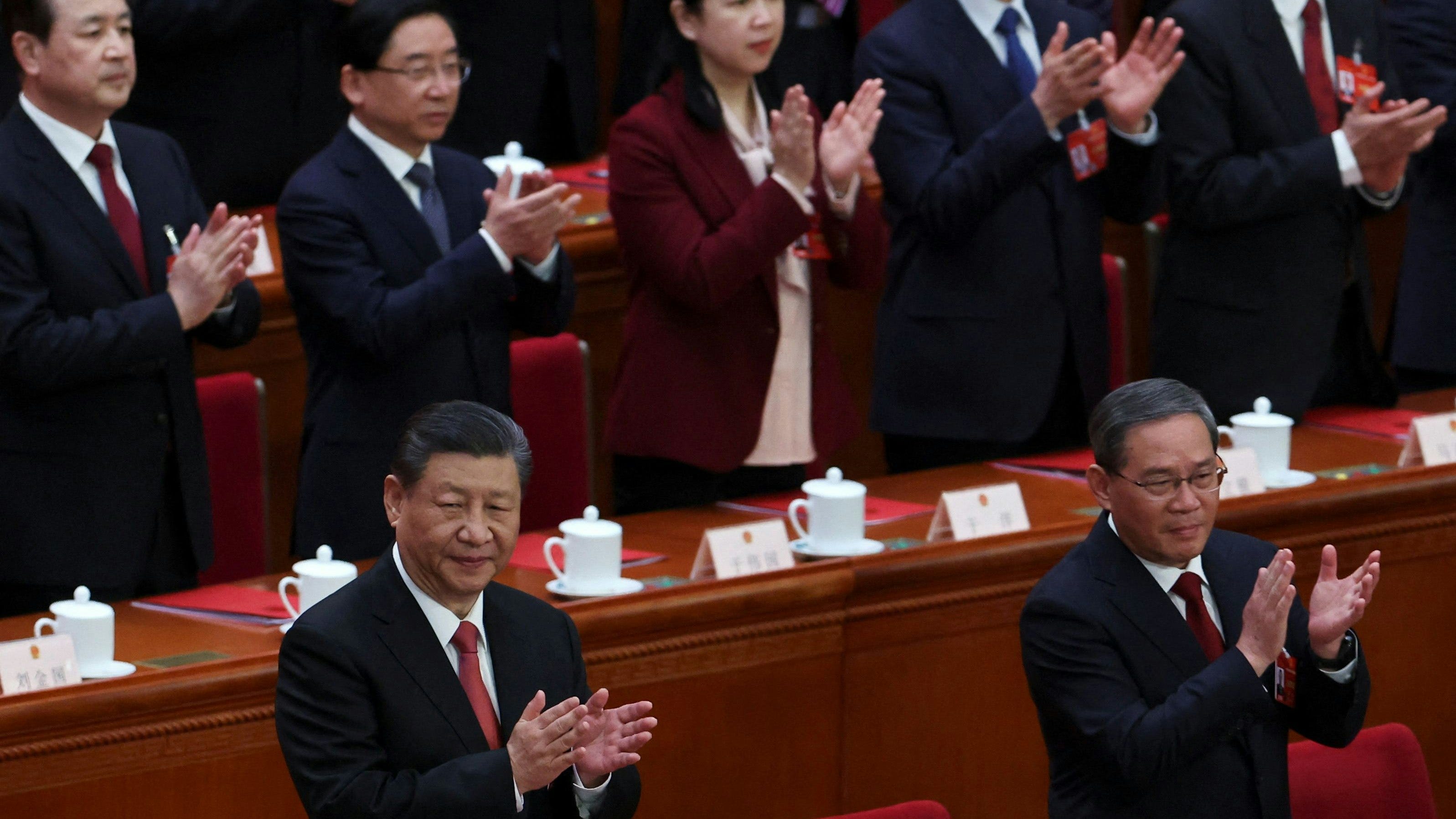
In his speech, Xi said:
“Why did the Soviet Union disintegrate? Why did the Communist Party of the Soviet Union fall to pieces? An important reason is that in the ideological domain, competition is fierce!
To completely repudiate the historical experience of the Soviet Union, to repudiate the history of the CPSU, to repudiate Lenin, to repudiate Stalin was to wreck chaos in Soviet ideology and engage in historical nihilism. It caused Party organisations at all levels to have barely any function whatsoever.”
The phrase “historical nihilism” is now a central concept of Xi Jinping Thought. In the CCP’s lexicon, the term describes not merely scepticism of the past, but the specific mechanism by which a regime forfeits its right to rule. To allow the narrative to fray is to authorise the state’s destruction.
On the surface, Xi’s position is Marxist-Leninist. Historical materialism holds that the Party’s rule is the product of dialectical inevitability — that the revolution was the necessary emergent outcome of historical forces. To deny the founding is to deny the process that made it inevitable, and therefore to deny the legitimacy of everything built upon it.
But beneath the Marxist framework is something far older. Xi has explicitly declared that China should consider Marxism its “soul” and traditional Chinese culture its “root.” What he means by this is Confucianism. In Confucian political philosophy, legitimacy is a narrative chain connecting the present order to its founding mandate. The Mandate of Heaven — tianming — is the principle that authority flows from an unbroken continuity between the founding act and the present exercise of power. Break the chain and the mandate dissolves. Every Chinese dynasty that fell did so not when it lost military power but when it lost the narrative.
When you understand this, you understand the events to which Xi is referring in his speech. The Soviet Union fell to glasnost.
When Mikhail Gorbachev launched glasnost — “openness” — in the mid-1980s, the intention was reform. The Party would acknowledge Stalinist crimes, demonstrate that it had matured beyond them and, in so doing, strengthen the union by trying to incorporate the same “pressure-release” mechanisms possessed by liberal democracy.
That was the theory, anyway.
In practice, glasnost destroyed the narrative on which the system depended. If Stalin’s terror was a crime, the state built on it was built on a crime. If the repression of national minorities was unjust, the borders drawn by that repression were unjust. The founding was a lie, and no amount of reform could make it true.
The constituent republics did not need to be seduced by Western liberalism. They only needed to hear Moscow say what they had longed to — that the empire was founded on force and fraud — for nationalist movements to sweep the regional assemblies. One by one, the republics declared sovereignty. By December 1991, Gorbachev was announcing the dissolution of the Soviet Communist Party — a party that, in Xi’s phrase, scattered like a flock of frightened beasts. Within six years, the man who had led the world’s pre-eminent socialist state was filming a television commercial for Pizza Hut. Humiliation ritual.
Understanding historical nihilism also allows you to understand why the CCP makes assertions that, to most Western observers, seem demonstrably false. Taiwan is not an independent nation. It is a rogue province — and the language is non-negotiable, because the moment Beijing concedes Taiwanese sovereignty is the moment the principle of secession enters Chinese political life. Xinjiang is not called Sharqiy Türkistan because to do so would be to acknowledge that the Chinese state is an occupier in Xinjiang. Tibet is not occupied. It is governed. And so on.
This is why the Party will never disavow Mao, despite the fact that the Great Leap Forward killed tens of millions and the Cultural Revolution destroyed a generation. None of this changes the fact that Mao was synonymous with the revolution itself, with the state, with the “New China”. The CCP’s official position — that Mao was “seventy percent right and thirty percent wrong” — is more of a survival strategy than an objective historical analysis. It is the minimum concession that prevents the founding narrative from collapsing entirely.
Because the day they disavow Mao is the day they disavow China.